
Your Dog knows you're a hero, do you?
Our Services
Supportive sessions where people who served and dogs grow stronger together.
Training
Personal guidance to strengthen obedience, confidence, and the bond between you and your dog.
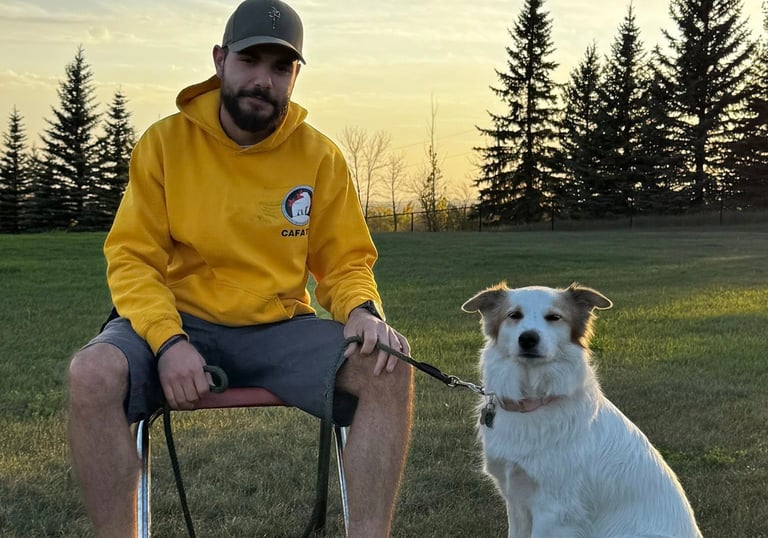
Bonding
Supportive group sessions where members learn together, grow together, and build community.
Connect with fellow veterans and first responders who understand your experiences and share your journey.
Support
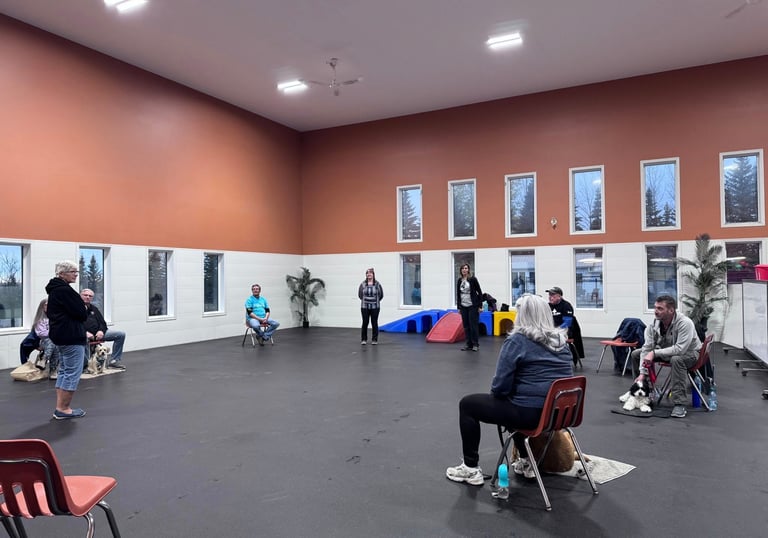
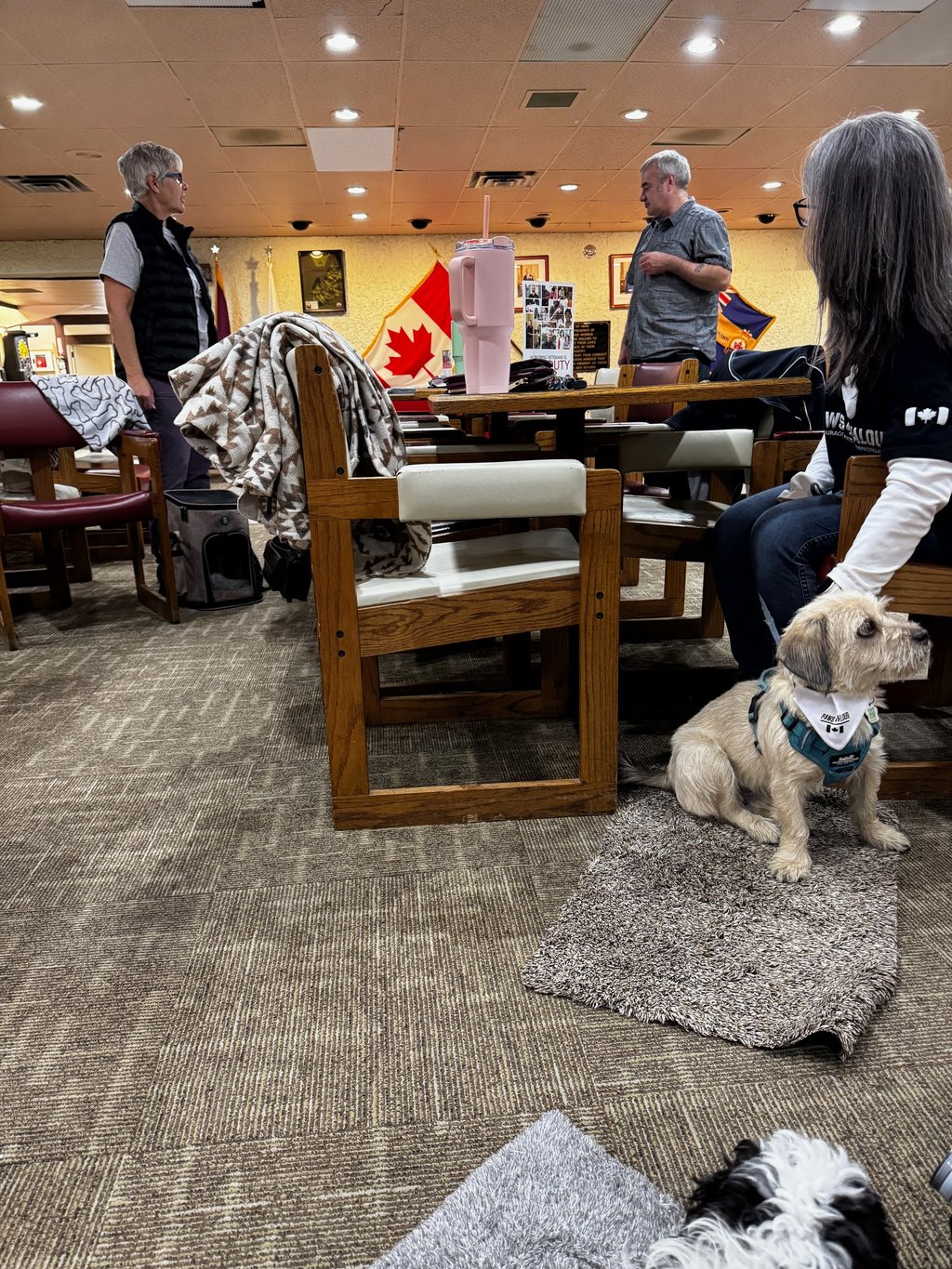

Our FREE 6 Week Program
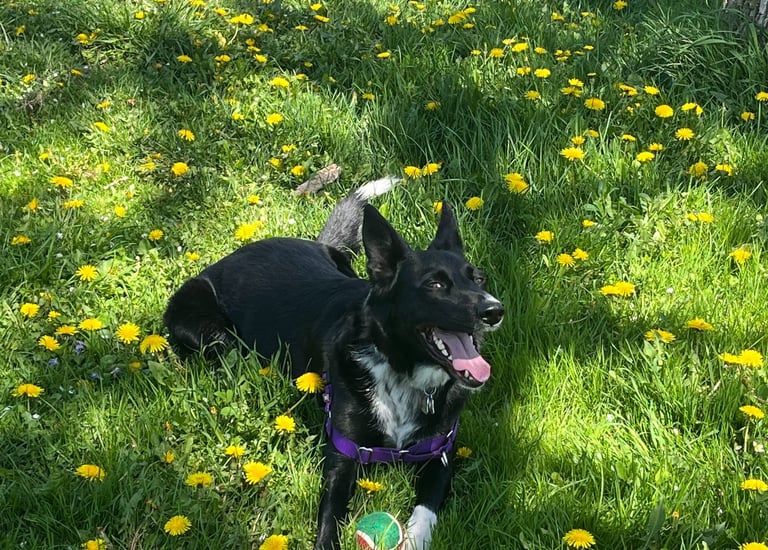

Spring Training
28 April - 02 June, 2026 The spring session is now full
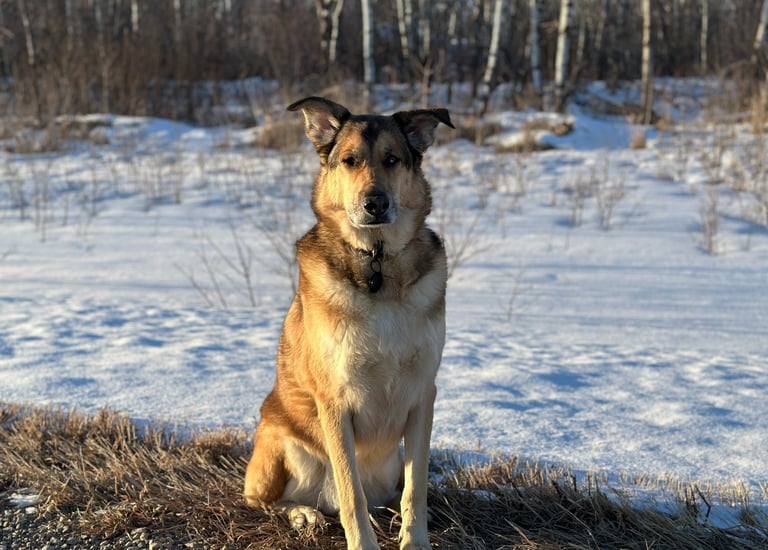
15 September - 20 October, 2026
Fall Training
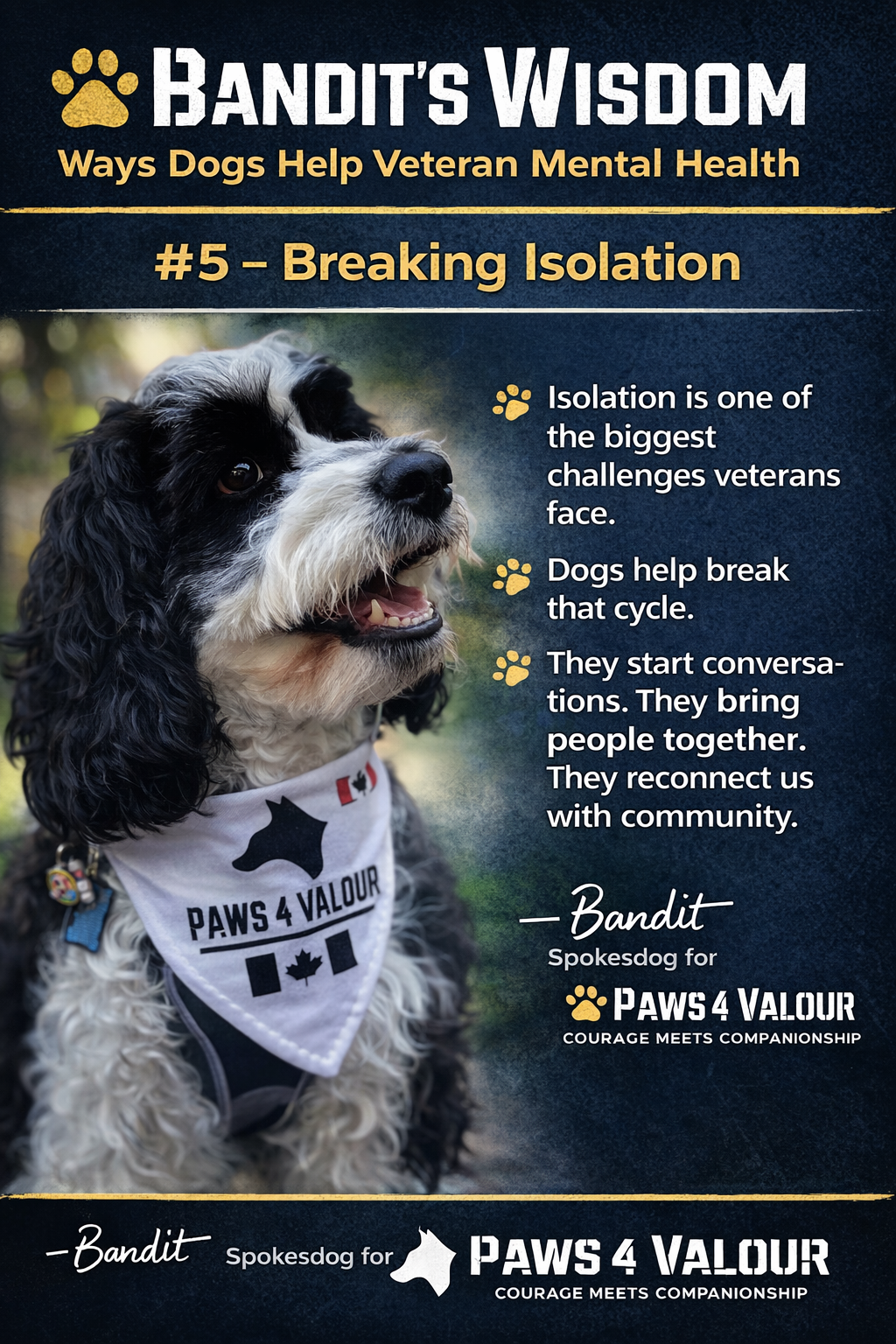
Bandit’s Wisdom
Ways Dogs Help Veteran Mental Health
A Paws 4 Valour educational series sharing simple ways dogs can support veteran, first responder, and family mental health — especially for those unable to attend training in person.
WHY THIS PAGE EXISTS
Not everyone can attend in-person training sessions or community events. This page was created to provide encouragement, education, and practical support for veterans, Canadian Armed Forces members, RCMP, first responders, and their families — wherever they may be.
Bandit’s Wisdom shares simple lessons about how dogs can help reduce stress, build routine, encourage movement, strengthen connection, and support healing.


MEET BANDIT


Bandit is the spokesdog for Paws 4 Valour and the face of the Bandit’s Wisdom campaign.
With his friendly face, calm presence, and playful personality, Bandit helps share an important message: healing does not always begin with big steps. Sometimes it begins with a walk, a routine, a quiet moment, or a dog resting at your feet.
Bandit reminds us that
Courage Meets Companionship.
HOW DOGS HELP MENTAL HEALTH


Dogs can play an important role in supporting wellness by helping create structure, connection, and comfort in everyday life.
Many veterans and first responders find that canine companionship helps with:
• lowering stress
• reducing isolation
• building routine
• encouraging exercise
• strengthening connection
• restoring hope and purpose
Dogs do not replace professional care, but they can be an important part of support and healing.
Write your text here...
BANDIT’S WISDOM LESSONS
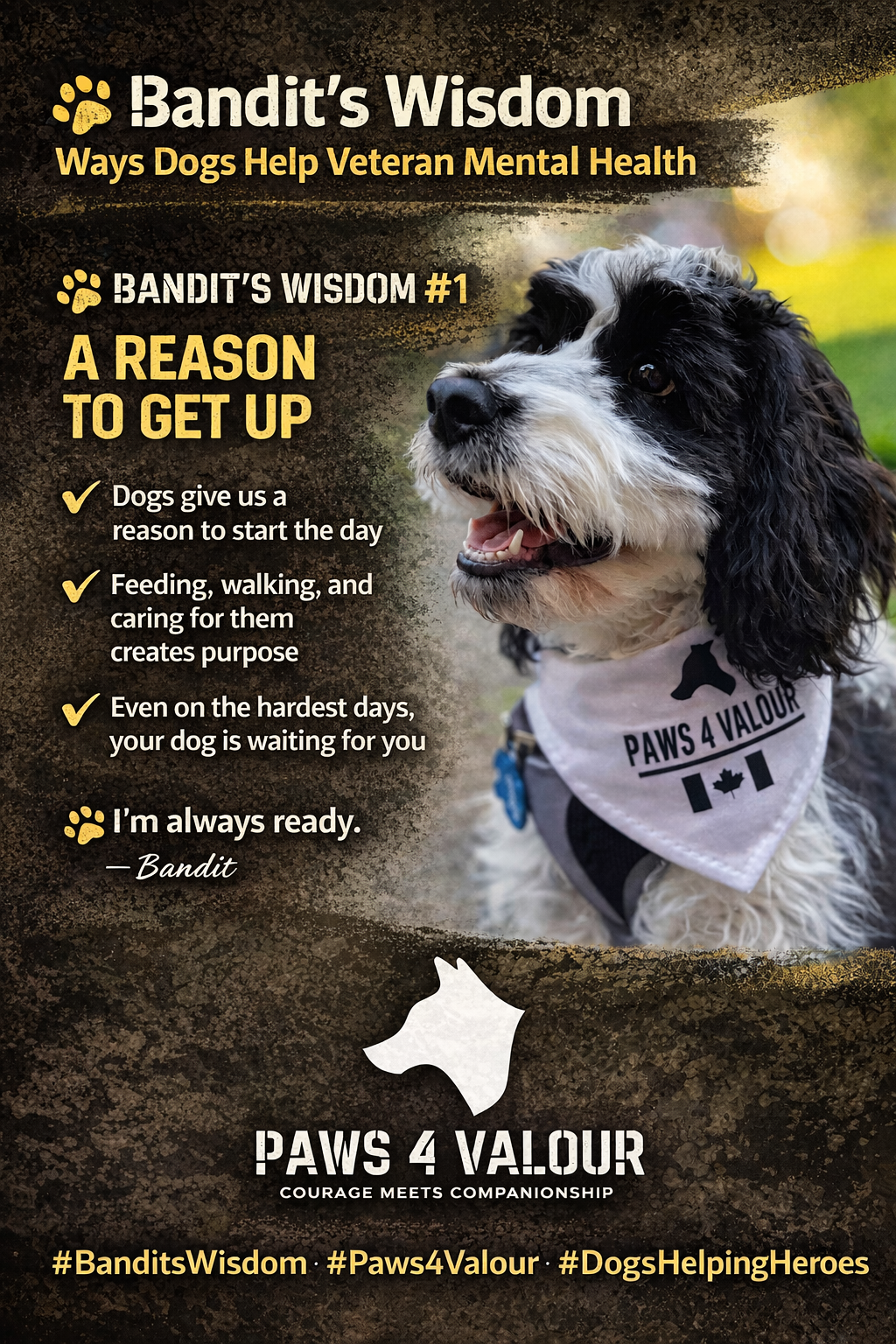
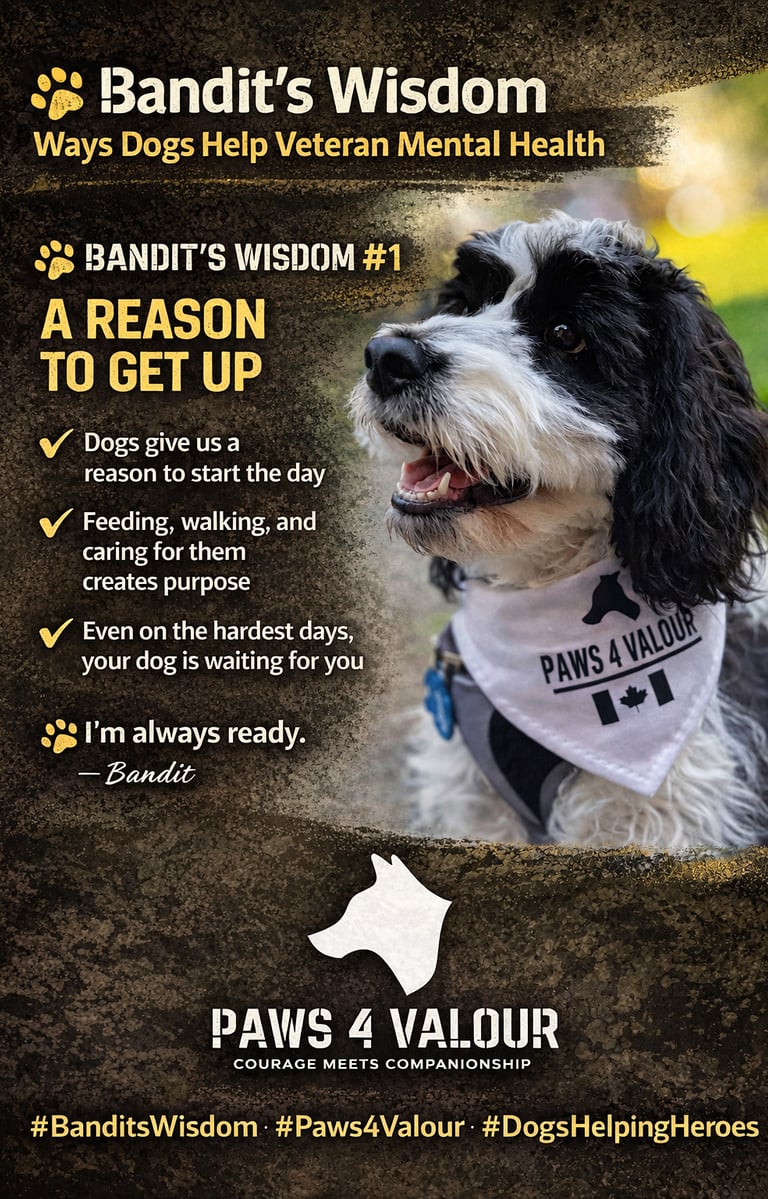
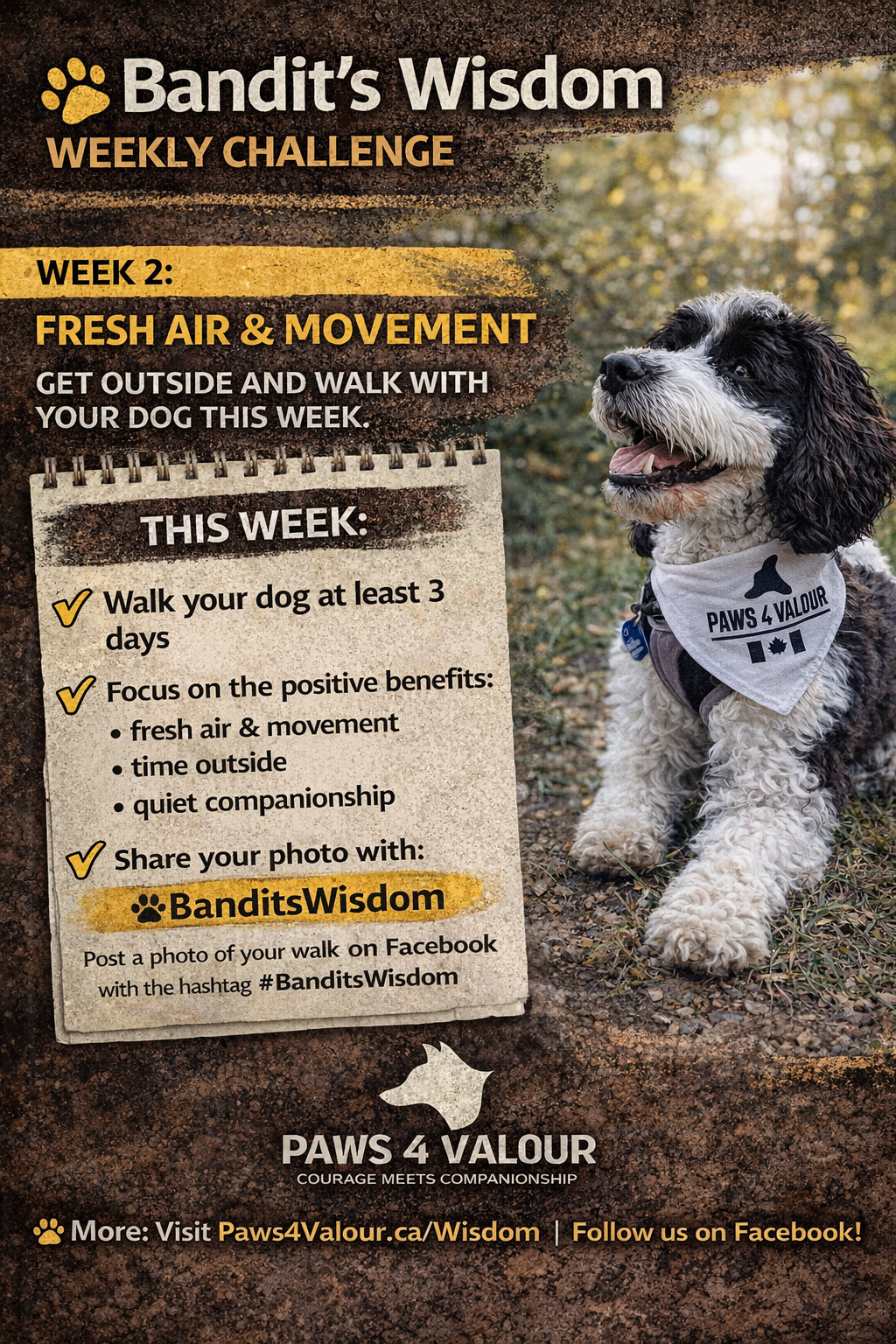
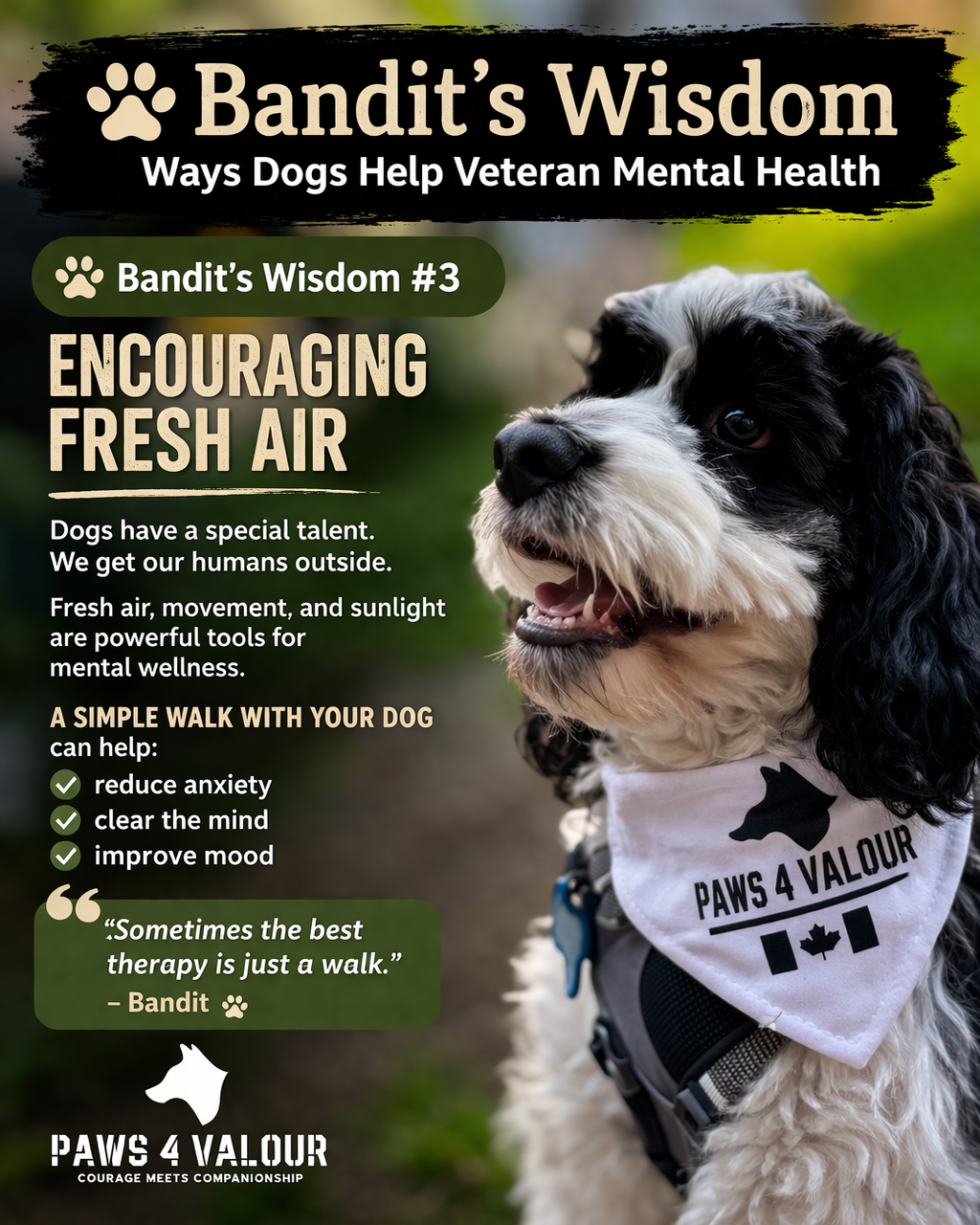
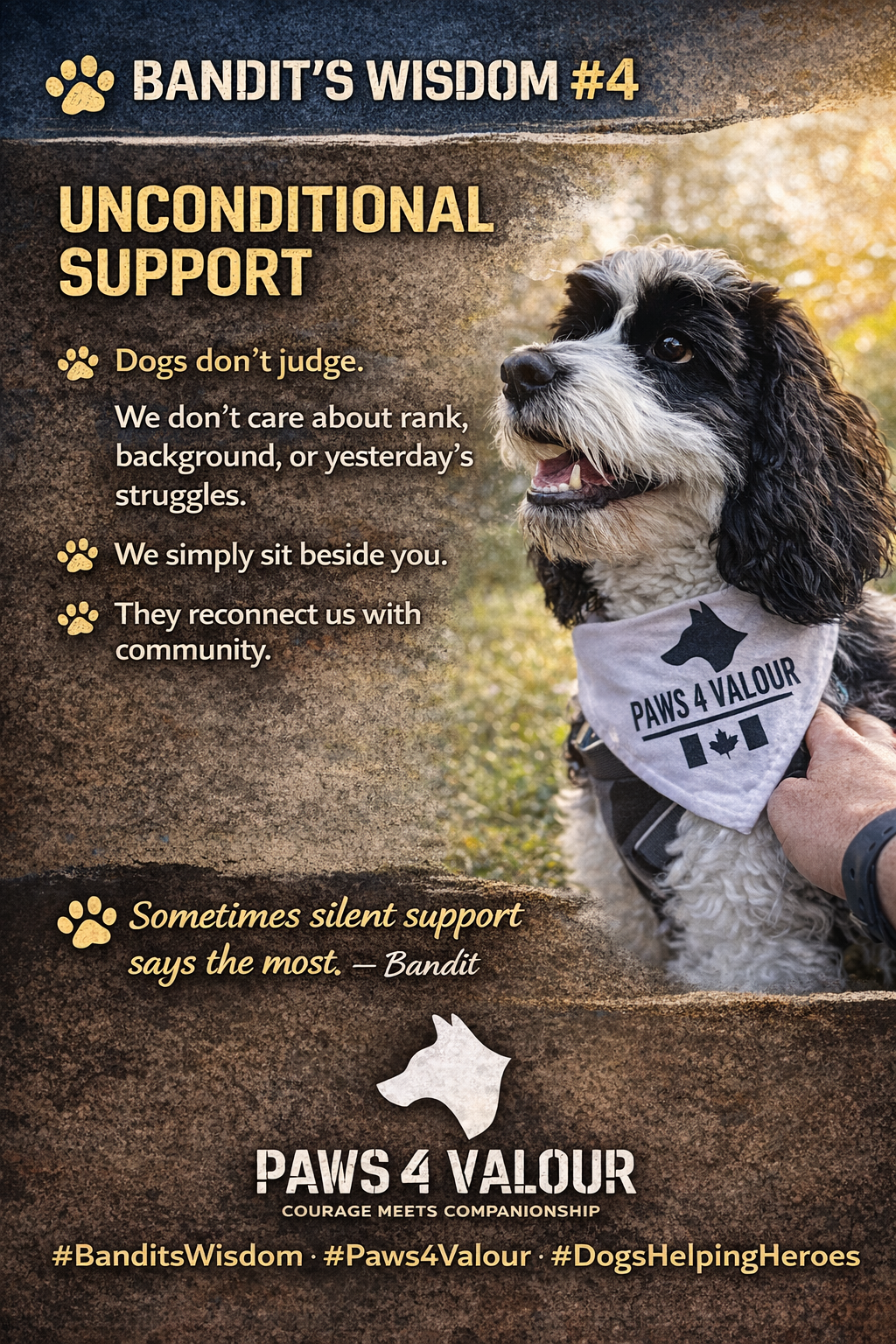
Below will be the full Bandit’s Wisdom educational series. Each lesson highlights a simple way dogs can support mental wellness
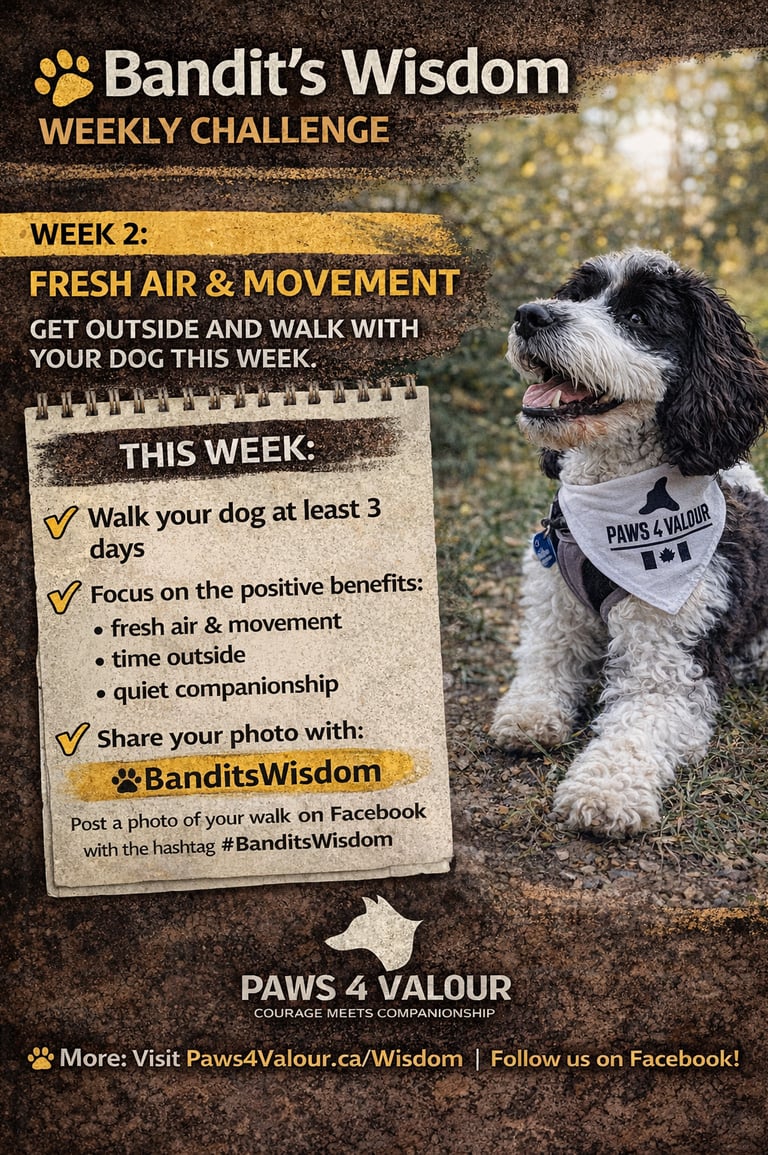
Check back weekly for the next lesson!
Dogs do not replace professional care, but they can be an important part of support and healing.
Common Questions
1. How long are the training sessions?
Each session lasts about 1 hour, followed by optional time to sit, talk, and socialize with other members.
2. Who can join the program?
Our program is 100% free for all active-duty and retired military members, RCMP, police, firefighters, paramedics, and other first responders.
3. Are all dogs welcome?
We love all dogs, but to ensure a safe and positive environment, our trainers will meet and assess your dog first. After approval, they’re welcome to join our sessions.
4. Do dogs need to stay on a leash?
We do ask that all dogs stay on leash. This isn’t just for safety—it also helps your dog stay engaged, calm, and ready to learn.
5. Do I need previous training experience?
Not at all. The program is beginner-friendly and designed for all levels.
6. Will I receive a certificate or official training documentation?
We do not provide training certificates, but you are free to apply for certification independently once you complete the program.
7. How much does it cost to join?
Nothing — the program is completely free for qualifying service members and first responders.
8. Can I come even if my dog struggles with behaviour issues?
Absolutely. We welcome dogs of all temperaments and will help you work through challenges safely.
9. Is this a therapy or service dog program?
No, this is not a clinical therapy or service dog certification program, but it can support mental health, bonding, and routine.
10. What should I bring to my first session?
Bring your dog, a secure leash, water, a small matt, and any treats you like to use for training. Comfortable clothing is also recommended.